Assessing Your Tack Storage Needs
Evaluating Your Tack Collection Size
Before you invest in any horse tack organizer, take stock of what you actually own. Count every bridle, girth, and saddle pad. A competitor with three saddles needs different infrastructure than a leisure rider with a single Australian stock saddle and a spare set of reins. The difference matters because storage volume scales with your discipline. Eventers accumulate boots and tendon guards. Trail riders accumulate halters and lead ropes. Your collection tells you what you truly require.
Look beyond quantity. Evaluate condition and frequency of use. That mouldy saddle blanket you keep for emergencies occupies the same space as your premium show pad. The spare bit you never fitted still needs a home. Catalogue everything, then decide what deserves prime placement. This exercise prevents overbuying and underutilising your chosen storage system.
Identifying Available Space in Your Barn or Garage
Walk into your stable or garage with a tape measure and a critical eye! Tack rooms often look spacious until every blanket is piled into the centre of the floor. A dusty corner near the feed room offers convenient access but poor airflow. That high ceiling, however, could suspend a horse tack organizer for bridles and lunge lines, clearing the floor entirely.
Consider the walls. Brick, timber, or corrugated iron each demand different fasteners. Consider the humidity too; a damp garage will corrode buckles and rot leather faster than any disorder ever could. Mark your zones:
- Daily-use gear within arm’s reach of the stable door
- Competition pieces in sealed containers, away from dust
- Heavy saddles at waist height to protect your back
Map the dimensions before you buy anything, because the best horse tack organizer in the world is useless against a wall it cannot fit.
Considering Frequency of Use and Accessibility
Three times a week you use the same bridle. The rest of your collection requires a lantern and a will to find. Yet there it sits, in one dusty pile. Frequency of use should dictate every storage decision you make.
Start with the daily grab items. These need to live where you can reach them half asleep and pre coffee. Clear examples include:
- the working bridle
- a spare halter
- your favorite saddle pad
The horse tack organizer you choose must put those items on the front line. Then assess the once a month equipment. Competition saddles, show blankets, and that fancy breastplate demand protection, but they also need a clear path. Accessibility means knowing exactly where each piece lives, so label or color code your zones. Otherwise, you are playing archaeology with your own gear.
Factoring in Seasonal Gear and Specialty Equipment
Almost 60% of South African riders admit to buying duplicate tack because their gear vanished in storage. Seasonal changes make this worse. Your cooler is essential in May, irrelevant in February. A functional horse tack organizer must handle this rotation.
Specialty equipment adds another layer of complexity. Endurance saddles appear only for competitive rides. Dressage saddles are reserved for clinics. Show halters surface once a season. Each piece demands a defined place.
- Heavyweight rugs for Highveld winters.
- Waterproof exercise sheets for summer storms.
- Mosquito masks for the humid coast.
Assessing these needs means identifying each item’s seasonal window and its required level of protection.
Planning for Future Additions to Your Tack
Future purchases are inevitable. The average rider adds at least five new items each year, from a competition bridle to a spare girth. That is why I always plan for a twenty percent buffer in every storage zone. Leaving one empty shelf in your horse tack organizer creates room for tomorrow’s acquisitions. This simple habit prevents the chaotic reshuffling I see in so many tack rooms.
Consider how your collection will evolve. A youngster moving up to adult saddles means bigger irons and longer girths. A switch to endurance riding brings lightweight packs and extra water holders. Each new item needs a defined location from day one. Without that, it becomes a floor pile. The storage system must anticipate these shifts, otherwise it remains a tool for a static moment rather than a living collection.
Types of Tack Organizers
Wall-Mounted Racks and Hooks
Wall-mounted racks and hooks transform an empty wall into a working surface. For many riders, a horse tack organizer starts with a simple rail, but the variety surprises seasoned owners. You will find single hooks for bridles, double hooks for reins, and padded racks that cradle saddles without creasing leather.
Some systems use galvanised steel for humid coastal barns, while others favour timber for a traditional look. I have learned that a well-placed rack can hold 50 kilograms, so anchoring into studs matters more than the hook itself. Common variations include:
- Saddle racks with adjustable widths
- Bridle hooks with rubber grips
Adding a blanket bar alongside these racks keeps heavier items separate. That arrangement reduces clutter and protects your investment, making the whole horse tack organizer more effective.
Freestanding Tack Trunks and Lockers
Freestanding tack trunks and lockers offer a mobile alternative to fixed wall systems. They suit riders who need to move gear between stables or who want a horse tack organizer that adapts when the barn changes. A sturdy trunk with a padded seat lets you sit while pulling on boots, a daily comfort.
Some riders prefer lockers with individual compartments per horse. Others use a single trunk where saddle soap, hoof picks, and spare reins share the same box. Floor space determines which option works, but so does your tolerance for bending over.
Differences worth noting:
- Marine-grade plywood for humid coastal barns
- Lockable hasps for shared stables
- Heavy-duty castors that roll over uneven floors
A quality trunk holds more than you expect, which also means it stays put once overloaded. For a horse tack organizer that travels to shows or moves between barns, freestanding units earn their floor space.
Over-the-Door Organizers and Hanging Bags
A standard stable door offers roughly two square meters of unused space. Most tack rooms ignore it. An over-the-door organizer changes that. Clear vinyl pockets show every brush at a glance. Fabric bags with reinforced grommets hold heavier items like hoof oil.
For a horse tack organizer in a shared space, hanging bags move easily. Relocate the unit when you switch stalls. Some designs use straps, others slip over the door. I prefer the strap style for thicker doors.
- Everyday brushes
- Hoof picks
- Fly spray
Durable stitching matters. A loaded bag pulls hard on seams. Choose mesh or quick-dry fabric to prevent mildew in the South African humidity.
Saddle Stands and Bridle Holders
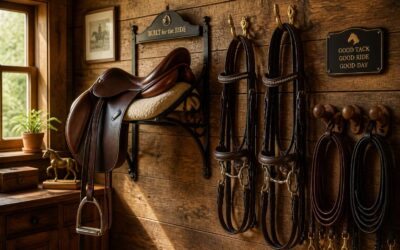
Beyond wall hooks and trunks, saddle stands and bridle holders become the structural core of a horse tack organizer system. A saddle stand keeps the tree straight and the leather away from damp concrete, which matters in coastal barns. A bridle holder prevents creases in the headpiece and stops reins from tangling.
Most stands are freestanding or wall mounted. Freestanding suits temporary stalls. Wall mounted saves floor space but requires solid brickwork. For bridles, choose a simple peg or a padded cradle. The cradle spreads weight across the crown piece. When two horses share a rack, give generous spacing between holders. One cheekpiece rubbing against another bit causes trouble.
- Freestanding saddle stands for flexible layouts
- Wall mounted stands for permanent placement
- Cradle style bridle holders for leather care
Portable Tack Bags and Caddies
I have watched riders lose an afternoon to a misplaced hoof pick. A horse tack organizer built into the wall cannot follow you to the show ring or the far paddock. Portable tack bags and caddies earn their keep.
These carriers hold the tools of each session. A well built tote fits a saddle, a cloth, and a few bottles. Reinforced stitching and a waterproof base matter. In South Africa, Highveld dust and coastal damp punish cheap zippers!
- Saddle tote bags that shield the tree during travel
- Grooming caddies with segmented pockets for brushes
- Bridle rolls that keep leather separated
The caddy becomes a personal organizer when each compartment serves a known purpose. Some riders keep separate bags for cold weather gear and competition. The labels fade, and the canvas wears thin.
Key Features to Consider
Durability and Material Quality
When you buy a horse tack organizer, you are entering a commitment with a piece of furniture that must endure constant abuse in South Africa’s varied climate. Humid coastal air and dry Karoo heat can destroy flimsy materials faster than a spooked horse destroys a lead rope. Look for galvanized steel fittings and marine grade hardware, because rust is not a design aesthetic!
Solid wood matters, especially if your tack room experiences temperature swings. Avoid particleboard, which disintegrates after one rainy season. For fabric components, choose heavy duty canvas with reinforced stitching. Key indicators of quality include:
- Stitching density of at least six stitches per inch
- Powder coated metal frames that resist chipping
- Water resistant seals on hinges and latches
This piece must survive decades of leather oil, hoof dust, and the occasional tantrum. Cheap plastic cracks, weak brackets bend, and then your priceless bridle hits the concrete floor.
Ventilation and Moisture Control
Ventilation is the feature that separates a reliable horse tack organizer from a moisture trap. In coastal KwaZulu-Natal, humidity sneaks into closed trunks and turns leather tack sticky with mildew. I’ve learned this the hard way. Your organizer needs mesh panels, louvered vents, or raised bases that allow air to circulate beneath saddles and blankets. Stagnant air destroys leather!
Moisture control also depends on placement. Position the organizer away from exterior walls where condensation forms overnight. Use silica gel sachets or activated charcoal in compartments, but never let them touch leather directly. A good organizer will have dedicated slots for these desiccants, so you can refresh them seasonally.
Check for drainage channels on saddle stands and breathable dividers in bridle bags. Consider these features:
- Airflow gaps between stacked items
- Moisture wicking liners
- Removable trays for drying wet gear
Without this attention, your gear deteriorates quickly.
Security and Locking Mechanisms
In the thin hours before dawn, the stable is quiet. A horse tack organizer without a locking mechanism is a target. Equipment theft is a nightly reality on South African farms and livery yards. You need a lock that resists more than a casual passerby.
- A concealed hasp that prevents bolt cutters from gaining purchase.
- A locking bar that secures the lid at multiple points rather than a single flimsy latch.
- A built-in combination lock or keyed cylinder that matches your existing stable keys.
The metal itself must be hardened. Soft brass looks elegant but yields to a pry bar. A horse tack organizer with reinforced corners and a steel locking plate protects a year of investment. Some units allow you to add your own padlock, which is wise. Choose a shrouded padlock that leaves no shackle exposed.
Mobility and Ease of Installation
A horse tack organizer must follow the flow of a working day. The stable is never static. You move saddles from the tack room to the paddock, bridles to the wash bay, and rugs to the drying line. A mobile unit with heavy duty castors handles uneven gravel and mud. A pull handle that locks at a comfortable height protects your lower back.
Installation should not become a project. A wall mounted horse tack organizer needs simple brackets and clear instructions. South African barns often have brick or concrete walls. Masonry anchors are a requirement. Check your drill has the right bit before you start.
- Measure every doorway the unit must pass through.
- Test the castors on your actual floor surface.
- Confirm the mounting hardware matches your wall type.
Modularity and Customization Options
Modularity is the difference between a storage system that grows with you and one that becomes obsolete. A well designed horse tack organizer offers removable partitions, adjustable height brackets, and interchangeable hooks. These elements let you reconfigure the unit when your needs shift, whether that means accommodating a wider saddle or creating extra space for grooming kit.
Customization options to examine:
- Adjustable shelf heights without tools
- Detachable bridle bars for seasonal rotation
- Modular base units that connect or stand alone
Seek a horse tack organizer that responds to your actual workflow, not a rigid template. The best systems allow incremental changes, so you can adapt as your collection evolves.
DIY and Budget-Friendly Solutions
Repurposing Household Items for Tack Storage
Repurposing everyday items keeps storage costs low. An old wooden ladder, laid across rafters, holds bridles and reins. PVC pipe, cut into sections and nestled in a drawer, creates tidy compartments for bits and small leather goods. A retired kitchen dresser, cleaned and conditioned, becomes a dependable horse tack organizer for grooming kits and hoof picks.
Other household castoffs work well around the stable:
- Wine crates stack for bandages and leg wraps.
- Mason jars, inverted and nailed beneath a shelf, keep studs visible and dust-free.
- A fishing rod holder, clamped to a workbench, secures whips and crops.
Building Custom PVC Racks and Hooks
PVC pipe provides a versatile base for a custom horse tack organizer. A 110mm pipe, cut to length and capped at both ends, creates a sturdy bridle holder when fixed to a wall. For hooks, cut a 45 degree angle at the end of a short pipe section, then sand the edges smooth to protect leather from abrasion.
A simple frame built from PVC elbows and T-junctions can hold multiple saddles without the cost of commercial stands. The material resists moisture, which matters in humid coastal barns. Consider these fittings for a modular build:
- 90 degree elbows for corner mounts
- T-junctions for branching arms
- End caps to protect pipe openings
The finished rack weighs little and can be disassembled when you rearrange your stable. A horse tack organizer built this way costs a fraction of retail alternatives and performs just as well.
Upcycling Pallets into Tack Stations
Pallets are a common sight outside South African warehouses, often left to rot. A single intact pallet can be stripped down and repurposed into a practical horse tack organizer. Break the boards loose with a pry bar, remove every nail, and sand each piece until leather is safe from splinters.
Mount the boards horizontally with a small gap between them. That gap lets air circulate, preventing mildew in coastal humidity. Lower rails can carry folded blankets, while higher rails suit bridles and halters.
- Check for chemical treatment marks or deep rot.
- Wear gloves and goggles during disassembly.
- Seal rough edges with a clear wood preservative.
The finished rails hold your gear at eye level, turning a waste item into a sturdy horse tack organizer without a significant cash outlay.
Using Pegboards for Versatile Organization
Pegboards reward flexible thinking. A single perforated board, bought at any hardware store, turns a blank wall into a working horse tack organizer. Hooks slide and reset without fresh holes, so the layout changes as your routine changes.
I have found pegboards especially useful in smaller South African barns. Leather stays off the floor, clear of dust and damp, and every item becomes visible at a glance. No more digging through trunks.
What a pegboard holds well:
– Bridles hung by the crown piece
– Reins looped over shorter pegs
– Girths draped over rounded hooks
– Canvas bags for hoof picks and brushes
A board mounted a few centimetres clear of the wall allows air to flow behind the gear, which prevents mildew in coastal humidity. This budget solution installs in an hour and rearranges in seconds.
Creating a Mobile Tack Cart from a Utility Cart
A utility cart costs less than a weekend at a riding clinic. With castors already fitted, it becomes a mobile horse tack organizer in under an hour. I wheel mine between the stable block and the wash bay, keeping halters and lead ropes within reach during morning turnout.
The top shelf holds grooming tools in a metal tray. The middle shelf carries fly spray and wound care supplies. The bottom shelf takes heavy items like hoof picks and spare lunge lines.
For a cart to work properly, consider these additions:
– A PVC pipe cut lengthways to hold brushes
– Hooks on the side rails for headcollars
– A bungee cord across the back to secure bottles
This approach suits South African barns where space shifts with the seasons. When you need to muck out or move horses, the cart rolls out of the way without unpacking.
Maintaining and Organizing Your Tack
Cleaning and Conditioning Before Storage
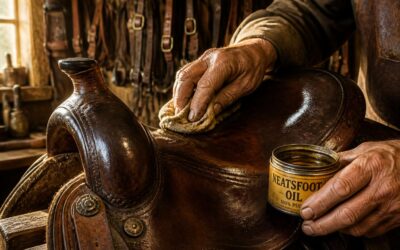
Before any piece of tack is stored, it demands a moment of reckoning. Sweat and grime accumulate silently, shortening the lifespan of your equipment. I have learned that cleaning and conditioning create a dialogue with your gear. Each bridle tells a story, and proper preparation keeps it ready for the next ride.
Begin with gentle soap, then apply conditioner while the leather is still damp. Inspect stitching and buckles for wear.
This attention transforms storage into preservation. When you finally place each item into your horse tack organizer, you honour the trust between horse and rider. Every future ride starts from a place of readiness!
Implementing a Labeling System for Quick Access
Maintaining a functional tack room requires more than stacking equipment. A clear labeling system turns chaos into quiet efficiency. When every bridle, girth, and saddle pad has a designated place, your horse tack organizer becomes a reference point rather than a storage bin.
- Colour coded tags for each discipline
- Durable laminated labels for weather resistance
- Photographs on bins for instant identification
Labels serve the rider who arrives early and leaves late. Quick access matters during summer shows and winter training alike. I found that labels reduce rummaging and protect equipment from unnecessary handling.
Rotating Seasonal Tack to Maximize Space
In South Africa, where summer sweat soaks saddles and winter demands heavier blankets, rotating seasonal tack is how a small tack room survives. A horse tack organizer that holds only the current season’s equipment frees floor space for daily work. I have found that stowing off-season items in clearly marked containers, then swapping them at the equinoxes, prevents clutter from accumulating.
Here is a simple rotation rhythm:
- Clean and condition each piece before storage.
- Store off-season tack in sealed bins with silica gel packets.
- Swap at the equinoxes, not when you are rushed.
This rotation gives your horse tack organizer a single job: holding what you use now, not everything you own. Your tack room stays functional, and your equipment stays protected.
Routine Checks for Wear and Tear
Routine checks for wear and tear keep a tack room safe. For South African riders, sun and dust attack leather silently. I run my fingers along every stitch and billet each Sunday. This habit reveals dry rot before it becomes dangerous. A horse tack organizer cannot fix a cracked rein, but it keeps every item visible for inspection. When tack piles up, damage hides between layers.
- Inspect stitching and billet holes for stretching or tears.
- Check metal buckles and keepers for rust or bent pins.
- Feel girth straps along their full length for weak spots.
These checks take five minutes, yet they spare you from equipment failure at speed. Organised storage turns inspection into a simple ritual. That is the real value of a well maintained tack system.
Training Everyone to Follow the Organization System
Training everyone to follow the organization system requires more than labelled shelves. In a shared barn, habits spread quickly. I have watched a meticulous tack room collapse into chaos within a single busy week. The horse tack organizer works only when every rider returns each item to its designated spot.
Make the system obvious. A first time visitor should know where bridles belong without asking. Colour coded name tags and outline shapes on hooks remove guesswork. When people understand the logic, they accept it. A useful horse tack organizer becomes part of the daily rhythm.
Establish clear expectations with simple rules:
- Return every item after each ride.
- Report damaged tack immediately.
- Reset the room before leaving.
Consistency matters more than perfection. Praise the rider who hangs their girth correctly. Correct mistakes immediately, without anger. The routine becomes automatic after a few weeks. New riders often mimic the tidiest member of the group, so set that example early.


0 Comments