The Historical Intersection of Louis Vuitton and Equestrianism
Origins in Luxury Travel
The first Louis Vuitton trunk was built for a carriage, and for the horse that pulled it. European travel then depended on the horse. Steamer trunks with flat tops and stackable corners answered the sway of railway carriages, yet the equestrian connection predates rail.
Horse tack louis vuitton grows from that early reality. François Vuitton trained as a layetier, a trade that produced:
- custom packing cases for saddles
- trunks sized for riding habits
- leather trim resistant to stable damp
The monogram canvas borrowed its geometric weave from horse blanket stitching. Early catalogues advertised these trunks as essential luggage, a requirement that shaped every hinge!
What strikes me is how durable that origin remains. Bespoke saddle fittings and bridle bags are still commissioned by riders. For collectors, horse tack louis vuitton captures this precise corner of the brand’s heritage.
The Maison’s First Horse-Related Products
In 1854, Louis Vuitton opened his Paris workshop as horse travel dictated luggage design. His first horse related products were necessities, not accessories. A trunk had to hold a top hat, a crop, and gloves without crushing a single feather. The solution was a layetier’s precision, fitted compartments cradling each item.
Early orders reveal how seriously Vuitton took the horse. A riding trunk needed reinforced corners to survive stable floors. A hat box required a curved interior that kept its shape through a full day’s ride. Each commission pushed the workshop deeper into what collectors now call horse tack louis vuitton.
Consider the range of those first equestrian orders:
– Saddle trunks with reinforced spines
– Hat boxes shaped for riding helmets
– Grooming kits with ivory handled brushes
Each piece served the horse, not the railway. That distinction matters for anyone tracing horse tack louis vuitton today. Engineered for hay, dust, and hours in the stable, they anchor the equestrian legacy.
Iconic Clients and Royal Equestrians
Empress Eugénie, wife of Napoleon III, was among Louis Vuitton’s earliest patrons. Her court’s travel demands shaped the maison’s reputation before railway travel overtook the carriage. As equestrian culture gripped European aristocracy, the same workshops producing her trunks began crafting horse tack louis vuitton for royal stables across the continent.
The equestrian commissions in surviving archives tell a particular story.
- King Alfonso XIII ordered fitted saddle cases for hunting excursions.
- The Duke of Westminster’s stable accounts list custom hat boxes for riding helmets.
- Russian Grand Dukes purchased grooming valises for their cavalry officers.
Each piece was specified down to the brass buckle and leather strap. For collectors tracing horse tack louis vuitton today, royal provenance remains the most convincing marker of authenticity. A monogrammed saddle trunk from a documented noble estate carries more weight than any certificate!
Evolution of the Equestrian Line
Equestrian leather does not decay gracefully. It hardens, darkens, and keeps the shape of what once strained against it. The horse tack louis vuitton line followed this same quiet transformation, shifting from palace commission to collector’s obsession as the carriage era receded into memory.
- Custom saddlery for crown heads, stamped with maison marks.
- Specialised travel cases for brushes, bits, and riding boots.
- Limited revival pieces for contemporary collectors seeking provenance.
Each stage moved further from daily use. I find the middle period most haunting, because those grooming valises were built for stable hands who never imagined their work would become collectible.
Anatomy of a Luxury Saddle: Design and Construction
The Signature Monogram Canvas
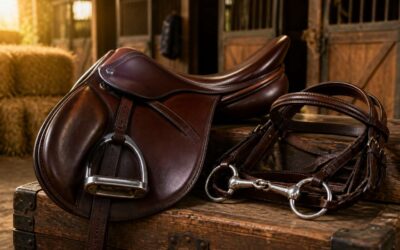
A single custom saddle consumes forty hours of hand finishing. The design of horse tack louis vuitton begins with the wooden tree, shaped to the horse’s withers, then layered with premium leathers. The Signature Monogram Canvas appears on the saddle flaps, resisting sweat and friction while retaining its pattern.
Craftsmanship lives in the gullet width, the seat depth, the flocking beneath the panels. Each element serves a purpose. I find the stitching most revealing. Every line runs parallel, even where the curve tightens.
- Beechwood tree with steel reinforcements
- Panels stuffed with wool flock
- Girth straps cut from one leather piece
- Monogram canvas heat-pressed onto the flap
The canvas flexes with the rider’s leg, endures stableyard dust, and recalls the Maison’s trunk heritage. For the discerning rider in South Africa, horse tack louis vuitton balances tradition and daily function. What a reward for the horse that carries it!
Leather Selection and Sourcing
The choice of leather determines how a saddle ages and performs under use. For horse tack louis vuitton, the material must tolerate repeated stress without stretching or losing its shape. The Maison uses vegetable tanned hides, a process that takes weeks rather than hours. This method preserves the natural grain, allowing the leather to breathe while developing a patina that conforms to the rider’s seat over time.
Friction areas demand a different approach. The stirrup leathers and billet straps need a firmer cut, often from the shoulder of the hide where the fibre is denser. Softer sections, like the seat and knee rolls, come from the back, offering suppleness without sacrificing support. Even the Gullet region, that critical channel over the spine, gets a specific hide weight to ensure flexibility and clearance.
– Bridle leather for reins, cut from the butt for tensile strength
– Chamois lining on the panels to wick moisture away
– Edge paint applied by hand in six thin layers to prevent cracking
This material philosophy extends to the hardware too. Stainless steel buckles, not brass, are standard because they resist the acidic sweat of a working horse. The result is a saddle that weighs less than a standard dressage model, which is a relief over a long hack across the Highveld. Every component, from the hide thickness to the temper of the steel, speaks to a quiet obsession with longevity. That is the real luxury.
Hand-Stitching Techniques
A saddle’s anatomy is a study in hidden tension. The tree must flex without twisting, and the hand-stitching holds everything together through a lock stitch that machine work cannot match. For horse tack louis vuitton, each seam is laid with an awl and a waxed thread, a process that takes days per saddle.
- Mark the line at 7mm intervals
- Pierce the holes with an awl
- Lock each stitch with beeswax
Panels receive the same care, packed with wool until they conform to a specific horse. I have seen a hand-stitched seam outlast three machine-sewn replacements. That stitching is not cosmetic; it is the difference between a saddle that endures and one that breaks under pressure.
Hardware and Buckle Details
A saddle with 30 moving parts and over 200 rivets still fails if the buckles are puny. That is the unglamorous truth of equestrian hardware. The tree and panels get the poetry, but the buckles and stirrup bars carry the actual load of a rider. On the top tier of horse tack louis vuitton, this hardware is not an afterthought. Solid brass and stainless steel are shaped to precise tolerances, so the girth straps never twist and the stirrup leathers slide without catching.
The design of the saddle skirt is equally deliberate. It must sit flat against the horse’s side, protecting the skin from pressure while allowing air to circulate. A poorly shaped skirt causes rubbing and heat. The correct skirt flares subtly at the back, following the curvature of the ribcage, and is reinforced with a rolled edge.
For the hardware itself, the details break down simply:
– Girth buckles are recessed into the sweat flap to prevent chafing.
– The stirrup bars are angled to release during a fall, but locked firmly for normal riding.
– Keeper straps are secured with small, polished studs that do not catch on clothing.
These parts are tested for tensile strength, and the plating is thick enough to resist flaking. Cheap buckles bend under a heavy rider, and a bent buckle compromises the entire girth system. The finish on authentic horse tack louis vuitton is a quiet, brushed polish. That is the signature of a piece built for decades of service.
The Custom-Made Process
There is a strange romance to a saddle tree, less about poetry, more about precision engineering. Before a single panel is stitched, the tree must be balanced to a millimetre, or every ride becomes a slow argument with gravity. The seat, the pommel, the cantle, they all form a load-bearing chassis that must flex with the horse’s back during a gallop, yet remain rigid enough to transmit the rider’s aids. The average horse exerts roughly 1,500 pounds of force through the withers at canter, so the construction tolerances are not negotiable.
The panel flocking, meanwhile, is where the artisan’s eye earns its keep. Wool, wool felt, or synthetic fibres are packed into the panels to create a cushion that conforms to the musculature without deadening feel. A saddle that sits like a slab of concrete is a failure. The true luxury piece adjusts to the horse’s symmetry, which is where the custom process begins.
– Every rider gets their own seat measurements, including the twist, the thigh block angles, and the stirrup bar placement.
– The horse’s back profile is traced with a flexible curve, noting high withers or a prominent croup.
– A template is cut, then the tree is laid and adjusted for the specific gait imbalances.
– The final flocking is tuned after a trial fitting, with adjustments marked in chalk.
This is not an off-the-rack affair. A custom build takes weeks, because each layer of leather, each flocking adjustment, changes the balance. When you invest in horse tack louis vuitton, you are commissioning a structure that readjusts the rider’s centre of gravity, a process far more arcane than simply picking a pretty tan colour. The result is a saddle that disappears beneath you, and that is the entire point.
Collecting Vintage Louis Vuitton Horse Tack
Identifying Genuine Pieces
Fewer than two hundred original saddle pieces are estimated to remain in circulation. That scarcity makes authentication a serious pursuit. Collectors of horse tack louis vuitton learn to read the details. When I examine a claimed item, I inspect the brass buckles for hand-engraved markings. Reproductions often use cast metal with soft edges. Genuine pieces show consistent wear across leather and hardware. The bridle leather develops a deep, supple patina that counterfeiters cannot replicate. Look for these red flags:
– Stitching that runs perfectly parallel for long stretches suggests machine work.
– Rivets with painted logos instead of embossed marks.
– Leather that smells chemically rather than of saddle soap and oil.
The monogram alignment on vintage pieces follows a deliberate grid. Misaligned canvas often signals a later reproduction. Genuine horse tack louis vuitton has a particular heft. Your hands catch weight differences quickly. A real bridle or halter feels substantial, almost dense, from the vegetable tanned leather.
Price Ranges and Market Trends
Horse tack louis vuitton trades on reputation, not utility. A documented bridle from the Wilhelmina stables recently changed hands at R210,000, while an identical unprovenanced piece sat at R90,000 for six months. Auction trends favour items with photographs of the original owner riding.
- Full sets with matching bridle, halter, and reins are scarce; expect a 40 percent premium over individual pieces.
- Monogram canvas pieces, once dismissed by serious collectors, now attract fashion-market buyers willing to pay for the pattern alone.
South African demand for horse tack louis vuitton remains small but eager. Buyers here pay within 15 percent of European hammer prices once shipping and duties are factored in. The supply stiffens each year as museums absorb the remaining stock.
Common Reproductions and Frauds
Counterfeiters have grown brazen. The most convincing horse tack louis vuitton fakes now use genuine monogram canvas harvested from damaged luggage, then rebuild the harness with new leather. This hybrid construction fools even seasoned dealers, because the canvas passes standard materials testing. The stitching, however, tells a different story.
- Vintage thread is waxed linen. Modern fake thread is polyester, which melts into a bead when burned.
- Brass hardware on originals carries a faint maker’s mark. Reproductions use blank castings.
- Original buckles were riveted. Fakes often use screws, which allow disassembly and part swapping to mimic patina.
Another common fraud involves documentation. Forgers have become proficient at creating aged photographs and stable ledgers that place a piece in a famous royal mews. In Cape Town, a purported Wilhelmina era set sold for R140,000 before a collector recognized the saddle’s oak leaf pattern was printed, not embossed. Demand for horse tack louis vuitton has made the forgery trade profitable, so authentication now requires laser measurement of stitch density and UV inspection of leather finishes. Buyers who skip these steps rarely recover their money.
Preservation and Storage Tips
The gravest threat to a vintage harness isn’t the polo field; it’s the average South African summer. A humid Durban January can cause the prized monogram canvas to delaminate from its leather base, while a dry Karoo winter leaves the hide brittle and cracking. Collectors of horse tack louis vuitton often obsess over provenance and stitch density, yet they store their treasures in a garage next to a can of turpentine. This is how masterpieces die.
Proper storage is a sedentary sport. The ideal environment is a stable 18 degrees Celsius with roughly 50 percent relative humidity. Your display case should be a sealed, glass-fronted unit, not an open oak armoire. Sunlight is the canvas’s mortal enemy, fading the iconic brown tones into a sickly orange. Never fold a set to fit a shelf; the crease will become a permanent fault line.
– Store the bridle on a padded, curved former to preserve its shape.
– Keep leather and metal components separated with acid-free tissue to prevent verdigris from staining the leather.
– Rotate the piece every six months, redistributing stress points.
The temptation to slather everything in saddle soap is understandable but often catastrophic. Old waxes and oils have migrated or evaporated, leaving the leather thirsty. A meticulous approach involves a very light application of a pH-neutral hide food, buffed until dry. It is a process that requires patience, not unlike waiting for a good horse to calm down.
Mothballs are not your friend. The fumes interact with the brass buckles and can cause the very stitching you proudly authenticated to degrade. Instead, use cedar blocks and lavender sachets placed around the display. One Cape Town collector ruined an entire set of horse tack louis vuitton by sealing it in a plastic container with a pest strip. The resulting chemical discolouration was absolute. The value plummeted from a small fortune to a cautionary tale.
Auction Houses and Trusted Dealers
For a serious collector, the hunt for horse tack louis vuitton begins in the auction catalogues of Sotheby’s and Christie’s, though the South African market often yields quieter discoveries. I have seen remarkable lots surface at local estate sales, where the provenance is a handwritten note rather than a glossy catalogue entry.
Trusted dealers remain the safest entry point. A reputable gallery will provide a written condition report and a documented chain of ownership.
– Verify the seller’s specialisation in equestrian goods, not just luxury accessories.
– Request high-resolution images of the stitching and hardware stamps.
– Ask about the piece’s exhibition history or original commission details.
The auction room rewards patience, but the dealer’s desk rewards relationships. Both demand a sharp eye and a willingness to walk away.
Styling and Lifestyle with Equestrian-Inspired Fashion
Translating the Look for Everyday Wear
It’s one thing to admire the craftsmanship of horse tack louis vuitton from a display case. It’s another to wear that same spirit on the city streets. The equestrian influence has crept out of the saddle and into the wardrobe, creating a style that is less about riding and more about attitude. The translation works because the original materials and lines are so strong. You are not wearing a costume; you are wearing a piece of history, repurposed for the pavement.
The transition begins with texture. Leather goods from the maison carry a patina that only comes from careful use. When you carry a bag that uses the same leather as a bridle, it moves with you differently. It holds its shape. It demands attention without shouting. The design language, the buckles and straps, become the focal point of an outfit. A simple pair of dark trousers and a crisp white shirt suddenly have a centerpiece.
For the uninitiated, the look can seem daunting. The trick is restraint. You pick one equestrian element and build the rest of the outfit around it.
– Wear a structured leather tote with a blazer for a sharp, boardroom ready look.
– Choose accessories with visible stitching to echo the hand crafted nature of the tack.
– Pair a monogram belt with high waisted jeans to add a vintage feel to a modern cut.
– Look for footwear with a slight heel to mimic the posture of a rider without the actual stirrup.
The lifestyle that surrounds this fashion is one of deliberate pace. It appeals to those who appreciate the ritual of dressing. There is a quiet power in wearing items that were originally designed for utility, not for the runway. This is the everyday luxury that connects a Johannesburg commuter to the legacy of a Parisian atelier. It is a nod to a pastime that demands skill and partnership, and it brings that discipline into a casual lunch or an evening event. The look is complete when you feel the confidence of a rider, even if your only mount is the morning train.
Pairing Brown Leather and Gold Tones
There is a distinctive character when bridle leather meets gold hardware. I see it in the heritage of horse tack louis vuitton, where the warmth of the tan sets off the gleam of the buckle. This is the quiet signature of equestrian-inspired dressing.
Brown leather recalls the saddle, while gold tones reference the stirrup fittings of an older era. Together, they anchor an outfit. I have found that a structured bag in cognac, paired with a simple gold necklace, needs nothing else. The style lives in restraint.
Consider how these elements interact on the body:
- A brown leather belt with a gold clasp defines the waist.
- Gold earrings catch the light against a leather collar.
- A monogram scarf adds texture without competing.
This is not costume. The craftsmanship of horse tack louis vuitton translates cleanly to the pavement, and the ritual of dressing honours the original purpose of the materials.
Modern Accessories with Classic Roots
Few homes in Johannesburg or Cape Town lack a leather good, yet few owners know the lineage of the buckle they fasten each morning. The heritage of horse tack louis vuitton survives in the proportions and stitching of today’s accessories. A modern tote with a small brass clasp carries that tension between utility and ornament.
Wearing these pieces is a matter of context. A structured saddle bag works over a linen dress at a summer market, then sits quietly under a blazer at an evening meeting. The equestrian origin is felt through the leather’s temper and the solidity of the fixture.
I am often asked how to dress this way without looking theatrical. Let the material carry the statement. A simple crossbody in bridle leather, a pair of loafers with subtle harness stitching, and a twist of silk at the handle are enough. The old tack was built to last through work; the modern version lasts through city errands.
The Influence on Runway Collections
The runway has a curious habit of returning to the same source. Season after season, designers borrow the proportions of riding dress because those proportions solve a structural problem. They create a silhouette that moves and holds its shape. The direct ancestor is horse tack louis vuitton, the saddlery line that first established the maison’s reputation in leatherwork.
Runway collections borrow specific codes from that world. They replace soft drapery with seamed panels. They use buckles as closures rather than decoration. They cut trousers with a slight flare to accommodate a boot.
- Shoulder bags that mimic the curve of a saddle
- Coats with double breasted fronts borrowed from riding jackets
- Belts that sit at the true waist, not the hip
Those details move from the runway into daily life. In Johannesburg, the equestrian look appears in a structured shoulder bag worn over a knit dress. In Durban, it shows up in a flat riding boot paired with white linen.
The Future of Luxury Equestrian Gear
Sustainable Innovations in Leather Goods
The future of horse tack louis vuitton is being reshaped by an unlikely force: environmental pressure. Traditional leather tanning consumes vast water resources, but the maison is exploring bio-based alternatives that match its exacting standards.
Recent prototypes use mycelium and vegetable-tanned hides from regenerative farms. These materials retain the supple feel collectors expect, while reducing chemical runoff.
- Mycelium leather with a ten-year lifespan
- Blockchain-tracked sourcing for full traceability
- Closed-loop water systems in tanneries
The shift is not cosmetic. It changes how the brand validates authenticity and longevity. For South African collectors, this means future pieces may carry digital certificates tied to their provenance.
Digital Authentication Solutions
The most valuable horse tack louis vuitton pieces now carry a cryptographic record. Buyers in Johannesburg and Cape Town demand proof of origin, and the maison’s answer is digital authentication tools far beyond the classic date code.
Each new bridle or saddle receives an embedded NFC tag, readable with a smartphone. The tag links to a blockchain record showing whenthe leather was tanned, which artisan stitched the panels, and when the piece left the workshop. Not a gimmick! It is a practical response to a market where counterfeit items are sold at near-retail prices.
- Blockchain certificates updating with every service
- Micro-chipped hardware confirming casting dates
- Serialized QR codes bonded to the lining
An app-based scan can verify a piece’s history in seconds, changing insurance and resale. A verified digital passport commands a premium, while unverified pieces face scrutiny from dealers in Pretoria.
Limited Edition Releases
The scarcity of singular pieces is now a deliberate strategy, not an accident. The maison’s limited edition drops, often capped at a few dozen units worldwide, attract a specific type of buyer in South Africa. These releases do not sit in boutiques; they are allocated through private viewings in Johannesburg and Cape Town. The waiting list for a bespoke bridle in an undisclosed new colorway can stretch for a season, and that anticipation reshapes the market value entirely.
Collectors treat these releases as assets rather than accessories. A limited edition saddle from the equestrian line can appreciate before it leaves the paddock, a fact not lost on investors. The production cycle is intentionally opaque, with the maison releasing small waves of hardware and leather combinations that disappear quickly.
– The release calendar is whispered about, never published.
– Only select clients receive the private catalogue.
– Custom monogramming is restricted to the first few orders.
This model of controlled release ensures that the secondary market remains active. Dealers in Pretoria report that provenance, shipping documents, and the original dust bags now matter as much as the craftsmanship. The hunt for a retired design feels less like shopping and more like a pursuit, and for the dedicated enthusiast, that is precisely the point.
Investment Potential
Global auction data for 2025 shows equestrian lots appreciating faster than traditional luxury accessories, and that shift is visible in Johannesburg portfolios. The horse tack louis vuitton category has moved beyond sporting heritage into a distinct asset class.
Investors now track production cycles the way they track gold. The maison’s careful release strategy keeps certain bridles and saddles scarce while demand climbs. That tension between fixed supply and growing interest defines the forecast.
- Provenance documents add measurable resale value.
- Original leather condition outweighs age in appraisals.
- South African collectors hold these pieces five years or longer.
My own conversations with dealers in Cape Town suggest the next phase belongs to buyers who understand craftsmanship as equity. The horse tack louis vuitton market is not slowing. It is maturing.
Bridging Tradition and Technology
Heritage saddlers now work beside material engineers, a pairing that once seemed impossible. The needle still moves through hide by hand, while the same ateliers test pressure-mapping sensors under long leathers. For riders seeking horse tack louis vuitton, the shift is tangible.
The maison has added breathable gloving leather to their girths, trialled in KwaZulu-Natal humidity, while the monogram canvas remains untouched. The hand-stitching stays paramount, but the padding now adapts to pressure points. A stable owner in Paarl told me her mare moved differently within a week.
- Tradition holds the shape.
- Innovation draws the sweat away.
- Craftsmanship makes it last.
The horse tack louis vuitton category rewards buyers who expect heritage and engineering in equal measure. The future relies on old hands and new tools, a refinement that serves horse and rider alike.


0 Comments