Essential Equipment for Australian Riders
Saddles and Tack Essentials
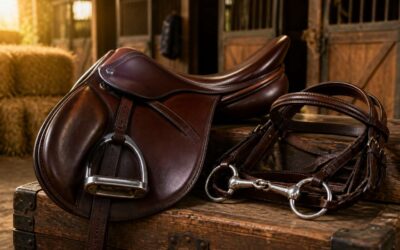
Every ride starts with a single point of contact, the saddle. A poor fit sends tremors through the spine and turns the willingest horse into a nervous animal. On Australian roads, with their rocky climbs and red dust, the saddle tree and rigging take a genuine beating. That’s why the first thing I test is the build.
When you shop for horse gear online Australia, there’s a lot of shiny rhetoric on the surface. The craftsmanship is in the seams, not the polish. Real leather has weight to it, and solid buckles refuse to bend. I always pull on a stirrup leather before I trust it. It saved me a loaded fall last season.
You cannot fix a broken shape by adding a pad. The saddle has to fit the horse’s back before it fits your leg. Trust the lump and the dry sweat patch. That is the true Australian tack. Keep the piece plain, keep it sound, and the horse will tell you the truth!
Choosing the Right Bridle and Bit
The same rule holds at the other end of the reins. A bit one size too narrow pinches the mouth and turns a willing horse into a head tosser. When I buy horse gear online Australia, I measure the mouthpiece against the horse’s grin, not trends.
The bridle carries the bit, so the crown piece must sit evenly behind the ears. I run my hand along the reins for rough edges before trusting them. The market pushes fancy browbands, but the stock horse needs none of that!
- Measure the mouthpiece across the widest part of the grin
- Check cheek pieces for even wear at the buckle holes
- Match the bit to the horse’s tongue space
A drop noseband that sits clear of the nasal bone and a loose ring bit with a gentle curve handle most stock horses without drama. Clean hardware and sound stitching keep the bridle serviceable for years.
Protective Gear for Horse and Rider
The average rider will fall off approximately once every hundred hours in the saddle, yet many Australians still treat a helmet like a show-day afterthought. When you browse horse gear online Australia, the sheer volume of carbon fibre and technical webbing can be dizzying. However, the finest helmet in the world offers no protection if it sits on your head like a tea cosy. Buy for the fit, not the finish. A helmet should grip your skull with a firm, even pressure, and you should replace it after any significant knock, even if the shell looks pristine.
Consider this the cerebral insurance policy of your equestrian wardrobe:
– Check the cheek pad density for a snug but non-migraine-inducing fit
– Verify the retention harness buckles without pinching your jawline
– Confirm the impact rating meets current Australian safety standards
Beyond the cranium, the conversation turns to the rest of your person. A well-fitted body protector is no longer the rigid suit of armour from decades past. Modern designs offer articulated panels that move with your spine while shielding the vital organs during a fall. For the working stock horse rider who spends long hours mustering, this gear is not a luxury; it is the difference between a dusty, funny story and a catastrophic injury. When shopping for horse gear online Australia, pay attention to the durable, full-length riding boots that guard against stirrup leather rub and low-hanging branches alike. The bush is unforgiving, and so should be your protective layers.
Seasonal Additions for Australian Conditions
Australia’s climate delivers four seasons in one day, and your horse’s wardrobe needs to keep pace. When browsing horse gear online Australia, you will find items built for scorching summers and frosty inland winters. The real essentials remain constant: a sturdy hoof pick, a sweat scraper, and a water trough heater for those bitter July mornings. Seasonal additions, however, can save your sanity and your schedule.
- Fly masks with ears for the relentless bushfly onslaught
- Lightweight, breathable rugs for sudden summer downpours
- Thermal quarter sheets for early rides before the sun cracks the horizon
Without these, you are either picking bot eggs off your jeans or coaxing a shivering thoroughbred out of a corner. Plan for both extremes and the weather will become a minor character, not the villain of your story.
Navigating Sizing and Fit from a Distance
Understanding Australian Saddle Fits
Nearly half of all saddle fit complaints trace back to a tree angle mismatch. Australian saddle fits require attention to three unseen contours. When you source horse gear online australia, the distance turns a simple purchase into a measurement challenge. I have seen a beautiful saddle ruin a happy horse because someone ignored the shoulder.
Consider what the eye cannot see from a listing:
- the slope of the shoulder
- the spring of the ribcage
- the clearance at the withers
These factors determine the true fit. A seat size that works for one breed may betray another. The maker’s interpretation of width, the panel’s density, and the flocking’s give all alter the outcome. The horse cannot communicate online, so your observation becomes the substitute.
Helmet and Boot Sizing Guides
A helmet’s circumference rarely matches a boot’s footbed length. Both measure the rider’s anatomy, yet the digital catalogue cannot convey the material’s give. When sourcing horse gear online australia, the listing’s photo is a two dimensional approximation. The foam’s density, the leather’s temper, and the sock’s thickness stay invisible.
The rider must generate three numbers before a cart button is pressed.
- Head circumference at the brow and across the occiput.
- Foot length from the heel to the longest toe while seated.
- Ankle circumference above the boot’s flex point.
The helmet’s shell is rigid, but the liner compresses with moisture and time. A boot’s leather tightens after rain and slackens with heat. South African sun and the Highveld’s frost affect these materials differently. A seller’s chart is a reference, not a guarantee. Your measurement is the only true offset against the screen’s dimensions.
How to Measure for Rugs and Boots
A horse’s body is a shifting landscape, not a static diagram. When sourcing horse gear online australia, the rug’s label says one thing, but the animal’s actual frame demands your own numbers. The cape’s winter rain and the Karoo’s dry heat shape a horse’s coat and muscle tone, so a rug measured in June may pinch by September.
- Rug length: centre of chest to tail base over the shoulder.
- Boot circumference: widest point of the cannon bone.
- Boot height: knee to fetlock along the back.
Boots need a finger’s width between tendon and lining. A tape measure beats any photo. South African riders trust their own hands more than a seller’s chart, because the horse in the stable is the only reference. Even the finest store cannot guess that horse’s exact withers and girth.
Top Brands Available in the Local Market
Locally Made vs International Brands
Australia exports more than kangaroos and cricket players; its horse gear is built to survive the Outback. When you shop for horse gear online australia, you will see homegrown Aussie brands and international names competing for your wallet.
Locally made equipment focuses on toughness and heat tolerance. International brands often win on sleek styling and advanced materials. Bates and Wintec represent Australian ingenuity in saddle fit. Stubben and Kieffer bring German leather craftsmanship. South African riders must weigh these differences carefully.
- Bates: Australian, air panel technology
- Wintec: Australian, synthetic durability
- Stubben: German, premium saddle leather
- Kieffer: German, traditional tree design
The right choice depends on your horse’s conformation and your riding discipline.
Trusted Names for Durability
When you search for horse gear online australia, certain names surface with dependable regularity. Zilco, a homegrown maker, crafts synthetic bridles and rugs that resist constant UV exposure, a quality that matters far beyond Australia’s borders. Syd Hill’s leather goods carry decades of outback credibility, while Prestige and Pikeur supply European construction standards to the same local inventory.
Durability does not mean heavy, unbending equipment. It means materials that endure daily work, repeated washing, and sudden climate shifts.
- Zilco: UV-stable webbing tested in harsh sunlight
- Syd Hill: hand-finished stitching over thick hides
- Prestige: moulded panels that keep their structural memory
I have watched a cheap strap fail within months while a Zilco equivalent looked untouched. South African riders face similar conditions, which is why these names command attention when browsing horse gear online australia.
Budget-Friendly Options Without Compromise
The conversation around cost in equestrian circles is often a quiet, slightly apologetic affair, but it needn’t be. Finding affordable gear in this market is about understanding material provenance and factory overruns, not just hunting for the lowest price. Many of the web’s largest retailers have deep line lists, and they will often cycle out colourways or update logo detailing, which allows you to source a top-tier item at a fraction of its original retail value. The trick is to verify the tread and the linings, not just the outer shell.
You can find a robust Australian-made lead rope or a set of ergonomic stirrup leathers for less than a single evening at a high-end restaurant. The local market has adapted to the price-conscious professional, offering simple designs that omit the fancy stitching but keep the tensile strength. When you are searching through horse gear online australia, consider the distinction between a cost saving and a cut corner.
1. Check the webbing density on cheaper synthetic halters to ensure it does not flex excessively under load.
2. Inspect the hook and billet attachments to confirm they are solid cast metal, not stamped profiles.
3. Look for previous season models of high-end numnahs and pads, as the fleece and wicking material remain identical.
South African riders benefit from this direct online access, where a mid-range saddle cloth from a reputable Australian brand often outperforms a locally produced full-grain alternative at the same price point. It is unwise to buy based on brand loyalty alone; instead, assess the specific construction technologies on offer. Focusing on the load-bearing components ensures your wallet remains intact, and your horse remains comfortable, without sacrificing safety protocols.
Eco-Friendly and Sustainable Gear Lines
South African riders often overlook the quiet evolution in Australian equestrian manufacturing. Brands like Classic Equine and Kincade now use biobased leather treatments and recycled polyweave surcingles that hold up under Highveld sun without the ecological compromise. Several saddlery houses publish their tanning certifications openly instead of burying them in fine print, which simplifies the decision.
When I search for horse gear online australia, I look for the EcoPro label or the hemp-blend fleece lines from Aussie Heritage. These materials breathe differently and need a break-in period that synthetic blends skip entirely.
- Kangaroo Leather Australia uses regenerative farming practices for their bridle hides
- Outback Equine offers compostable feed bags and hoof pick packaging
- Southern Cross Saddlery has switched to water-based adhesives in laminated knee pads
The practical edge for South African buyers is durability. Sustainable construction means dense webbing and reinforced stitching, which translates to gear that survives our dust and humidity.
Limited Edition and Custom-Made Equipment
When you search for horse gear online australia, the limited edition drops from Aussie saddlers move quickly. I watched the Copperline Stirrup series from Tate Equestrian vanish within forty eight hours of release. These pieces carry serial numbers and a certificate that reads like a wine label, which is oddly fitting.
Custom work takes a different pace. Thornbury Leathercraft still insists on paper patterns and hand-stitched panels. They measure your saddle tree against your horse’s withers using a photogrammetry app that captures every contour precisely. A custom bridle from them costs more than a weekend away, yet riders swear the fit transforms their contact.
Keep an eye on these releases:
- Bankside’s annual Kangaroo Loop collection, capped at fifty sets
- The “Sunburnt” stirrup leathers, dyed with local ochre
Each batch sells out predictably, so patience is not part of the equation.
Delivery, Returns, and Customs Considerations
Shipping Times Across States
Buying horse gear online australia is straightforward. Getting that gear to South Africa takes planning! The parcel first travels domestically, often across several states, before it reaches an international hub. Domestic couriers in Australia typically deliver interstate within three to seven business days. International freight, however, depends on customs, the courier, and the declared contents.
Here is what South African riders should track:
- The seller’s return policy, since many Australian stores require you to cover the return freight
- The customs declaration value, which determines your import duties and 15% VAT
- The courier’s tracking system, since some Australian providers hand off to local partners
I have seen parcels sit in customs for two weeks because the invoice was unclear. Most deliveries take ten to twenty business days, and leather items sometimes draw extra inspection.
Return Policies for Fit Issues
The parcel finally arrives, but the saddle’s gullet sits too narrow across your horse’s withers. This moment reveals the true cost of buying horse gear online australia. A fit issue transforms a straightforward purchase into a logistical puzzle with three distinct variables: the seller’s goodwill, the courier’s speed, and your own patience.
Most Australian retailers accept returns for fit issues, but their policies vary sharply. Many require you to absorb the return shipping expense, which can rival the original freight cost. Others offer exchange programs where they ship a replacement immediately, but they hold your refund until the original item clears their warehouse. A handful of premium stores provide fit guarantees, yet these often exclude custom or clearance items.
– Always photograph the gear with the original packaging before you even try it on your horse.
– Request a written confirmation from the seller that they accept fit-related returns before you finalise your payment.
– Verify whether the seller requires the item in its original, unworn condition or if minor saddle marks are acceptable.
The customs declaration complicates matters further. If you return an ill-fitting bridle for a refund, you cannot reclaim the 15% VAT you already paid to SARS. Some sellers will mark the return package as a warranty replacement, but this practice sits in a grey area. The declared value on the original invoice also determines what you owe, so a discounted item may trigger fewer duties upfront, but the return freight remains your responsibility. Every return becomes a calculation, one where the shipping timeline matters as much as the fit itself.
Import Duties and GST on Overseas Orders
When you buy horse gear online australia, the price displayed never tells the whole story. South African customs applies import duties based on the declared value, and the 15% VAT lands on top of that total. A saddle priced at R12,000 can easily carry an extra R2,500 before it clears OR Tambo.
Different gear categories attract different tariff rates. Leather goods sit in one bracket, synthetic materials in another. Some sellers undervalue declarations, but that gamble can backfire if the parcel is inspected.
- Check the SARS schedule for your item’s tariff code
- Add 15% VAT to the purchase price plus shipping
- Factor in courier handling fees for customs clearance
The GST confusion comes from Australian sellers who quote prices without their own 10% GST. International orders often remove that tax at checkout, but not always. Verify before you pay. The courier’s clearance process also determines when you see the final figure, and that figure can shift between quote and delivery.
Tracking and Insurance for High-Value Items
The first rule of ordering across the ocean is simple: certainty is a rare commodity. Shipping from horse gear online australia takes time, patience, and a little detective work on your part. High-value saddles and bridles do not travel lightly. They sit in warehouses, wait for connecting flights, and sometimes vanish from the tracking radar for days.
That silence is the most dangerous moment. A tracking number gives you the location, but it does not guarantee the condition of the box. For a saddle worth more than your monthly rent, the protection comes from the premium you pay at checkout. Third-party transport insurance is not an optional extra. It is the difference between a replacement arriving in Cape Town and a lengthy email chain that ends nowhere. Customs can hold a parcel for inspection, and that process is outside the seller’s control. Your insurance policy covers the loss, not the delay.
A single rule applies to every purchase:
1. Confirm the declared value matches the invoice.
2. Insure the full replacement cost, not the discounted price.
3. Track the parcel through the courier’s portal, not the seller’s generic link.
The small print on returns also deserves scrutiny. International fit issues are common, but returning a saddle to Brisbane is expensive. Check whether the seller covers return freight or expects you to handle the courier costs. Every detail matters, and the gear that arrives on your doorstep is only the beginning of the story.
Packaging and Handling for Delicate Gear
The journey does not end when a parcel leaves Brisbane. The real test begins inside the cargo hold, where boxes stack against each other and handlers work against the clock. For horse gear online australia, packaging is not a courtesy. It is the difference between a bridle that arrives ready for the saddle and one that arrives with cracked leather. Couriers sort parcels by machine, and a soft-sided package rarely survives that process intact.
Expect a reputable seller to wrap leather goods in acid-free tissue, then seal them in waterproof linen. Saddles should travel in rigid crates, not cardboard. Stirrup leathers and girths need their own protective sleeve. A simple checklist helps when the box arrives:
– Check the outer carton for crush marks or water stains.
– Inspect all stitching and buckles before the courier leaves.
– Keep the original packaging until you have ridden in the gear.
Customs inspection adds another layer of risk. Officials may open a package to verify contents, and they will not repack it with the same care. A saddle that leaves Australia in perfect condition can arrive in Johannesburg with a gouge in the pommel. The declared value on the invoice must match your insurance claim, so do not ask a seller to undervalue the shipment to reduce duties. That mistake voids your protection and leaves you with damaged gear and no recourse. Returns follow the same logic. If the fit is wrong, expect to pay return freight. That cost, combined with import duties already paid, makes a poor fitting saddle an expensive error. Measure twice, order once, and always demand packaging that treats the gear like the investment it is.
Click and Collect Options for Rural Buyers
For rural South Africans, delivery is not a doorbell moment. A courier will not find a farm name painted on a rock. Choose click and collect. Your horse gear online australia order is held at a depot in town. You collect when your own errands take you there. No frantic calls about gates, no packages left under a thorn tree.
Returns and customs still travel the long road. A wrong-sized saddle means return freight to Australia, and the import duties already paid will not come back. Check the depot’s opening hours and crate size limits.
- Use the depot address for the order.
- Confirm insurance covers the collection stage.
- Ask for SMS alerts when the parcel arrives.
The system is not perfect, but it beats a 300 km round trip for a package that missed you by ten minutes.
Caring for Your Gear Between Rides
Leather Care in the Australian Climate
Riding through an Australian summer leaves its mark, and not just on you. The sun here performs a slow, persistent pull on every ounce of natural moisture in your leather. A saddle left in the glare of a ute tray for a few hours can emerge stiff and pale, its fibres brittle. This isn’t simply a cosmetic worry. It is the beginning of structural failure, a reality every rider faces when browsing horse gear online australia for replacements sooner than they planned.
The answer lies in a rhythm that becomes as second nature as tightening a girth. After a ride, you know the drill. Loosen the straps, wipe down the leather with a slightly damp cloth to lift the sweat and dust, then let it dry away from direct heat. But once every few weeks, that surface wipe isn’t enough. The leather needs a deeper drink. I lean towards pure neatsfoot oil or a high-quality balm, applied sparingly with a soft rag. The goal is to nourish, not to soak, which can leave the stitching feeling tacky and weak.
– Check the flex of the leather after oiling. It should feel supple, not soggy.
– Inspect the stitching for signs of sun rot, especially around the billets and girth straps.
– Store your gear in a place with stable temperature, away from the cycle of scorching days and cool nights.
The fluctuating humidity, the dry winter air that cracks, the humid monsoon season that breeds mould, they all ask for a different tempo in your care. Some riders I know swear by a coat of leather conditioner before the wet season begins, a simple measure that protects your investment. Thoughtful maintenance like this is often the difference between the same bridle lasting a decade or failing in two years, a factor many overlook when comparing prices for horse gear online australia. It is a quiet, ongoing conversation with the elements, and your gear is listening.
Storing Blankets and Saddle Pads
The period between rides often determines how long your gear survives. Blankets and saddle pads collect sweat, dust, and grit. The fine particles grind into fibres and weaken the wool and synthetic layers protecting your horse’s back.
I’ve seen riders hang saddle pads in the open air, thinking sunlight helps. It fades colours and weakens stitching. A shaded, breathable area works better. Blankets need the same respect. Fold them loosely, never compressed under heavy saddles.
Here is a simple between-ride routine:
– Shake out each pad after every ride
– Rotate blankets so the same side doesn’t bear constant pressure
– Brush fleece gently to lift embedded hair
If you’re browsing horse gear online australia for replacements, you’ll notice well-cared-for items outlast those left in a heap. That’s why riders compare prices for horse gear online australia with longevity in mind. Proper storage keeps them ready for the next ride.
When to Replace Worn Equipment
Between rides, your gear endures more than the ride itself. Sweat and grime accumulate in crevices. I check stitching after every use. A single loose thread can unravel a girth or rein at the worst moment.
The replaceable lifetime of equipment varies. Leather that cracks when flexed is past saving. Buckles that no longer seat properly create dangerous gaps. Fleece that has matted flat loses its protective cushion.
Consider these signs when browsing horse gear online australia:
- Cracking or peeling leather at stress points
- Frayed stitching on webbing or billet straps
- Rust that pits the surface of buckles
- Fleece that no longer springs back after pressure
Horse gear online australia suppliers list replacement parts for a reason. Replacing a worn item before failure costs less than emergency repairs after it breaks.
Cleaning and Sanitising After Floods or Dust Storms
Floodwater and dust storms leave residue that normal wiping cannot remove. Mud from flood events works into stitching and under buckles, carrying bacteria that can cause skin irritation. Dust storms drive fine particles deep into fleece and leather pores, where they grind against the horse with every stride.
After either event, the gear needs to be stripped down completely. Leather separates from textile components for proper attention. Pads and fleece require a disinfectant safe for horse skin. Leather needs a damp cloth first, then a conditioner with antibacterial properties. Full drying before reassembly prevents trapped moisture.
When shopping for horse gear online australia, care labels matter. Some materials cannot survive repeated sanitising. Others require specific products that are not always available locally.
- Flood exposure requires thorough rinsing before any cleaning product is applied
- Dust storms require brushing off loose grit before wet cleaning begins
Trapped moisture after a flood can cause rust and rot. Air items in the shade, turning them inside out where possible.

0 Comments